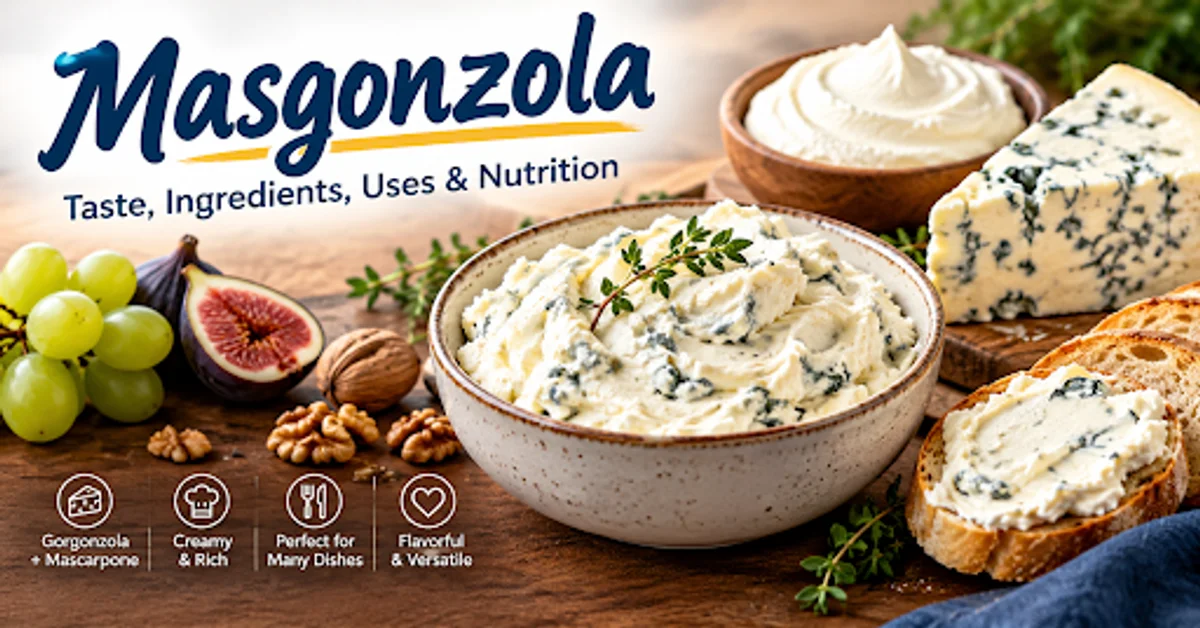
Masgonzola is a creamy combination of Gorgonzola and mascarpone. It can be produced as a blended cheese combination or as alternating layers of the two dairy products. Commercial examples confirm that Gorgonzola-and-mascarpone products are made and sold as soft, creamy specialties. The result is usually softer and richer than ordinary Gorgonzola. Mascarpone contributes a mild, buttery character and velvety texture, while Gorgonzola supplies the tangy, savory, blue-veined personality that makes the combination distinctive.
The name Masgonzola is naturally understood as a combination of “mascarpone” and “Gorgonzola.” It provides a convenient way to describe a preparation in which these two cheeses are brought together. The exact name used commercially can vary. You may see products labeled Gorgonzola e Mascarpone, Gorgonzola with mascarpone, Gorgonzola-mascarpone, or another brand-specific name. This means shoppers should focus on the ingredient list rather than assuming every product will use the word Masgonzola.
Masgonzola is best understood as a cheese specialty or preparation rather than a separately protected cheese with its own PDO specification. Gorgonzola, by contrast, is officially registered as a PDO cheese in the European Union, with defined characteristics and production requirements. This distinction matters because there is no single universal Masgonzola formula. Products can differ in their ratio of Gorgonzola to mascarpone, appearance, texture, and nutritional values. Some are blended, while others are clearly layered.
Related: Trinou: AI Project Management Made Simple
What Is Masgonzola Made Of?
Gorgonzola and Mascarpone
The two essential components are Gorgonzola and mascarpone. Gorgonzola is an Italian blue-veined cheese made from pasteurized whole cow’s milk under its PDO production specification. Its characteristic blue-green or grey-blue veins develop through selected molds during production and maturation.
Mascarpone provides a completely different character. It is soft, rich, mild, and creamy. When combined with Gorgonzola, it helps create a smoother product with less aggressive blue-cheese intensity. The combination therefore offers both depth and softness in one bite.
Common Masgonzola Ratios
There is no universal Masgonzola ratio. Some commercial products use an equal 50/50 cheese blend, such as a product listed by Coop Switzerland with 50% Gorgonzola and 50% mascarpone.
Other products use different proportions. For example, one Conad product lists 60% mascarpone and 40% Gorgonzola, producing a particularly rich and creamy balance. This variation explains why two Masgonzola-style products can taste noticeably different.
Ingredients That Affect Its Flavor
The proportion and style of Gorgonzola have a major influence on flavor. A product based on a milder Gorgonzola can be creamy and gentle, while a greater proportion of stronger blue cheese can produce more pronounced salty, tangy, and earthy notes.
Gorgonzola itself has recognized styles including Gorgonzola Dolce and Gorgonzola Piccante. The official consortium describes Dolce as softer and milder, while Piccante is firmer and more pronounced. Their specified maturation periods also differ.
How Is Masgonzola Made?
Blended Masgonzola
One approach is to combine the two components into a relatively uniform mixture. This produces a soft cheese preparation in which mascarpone and Gorgonzola are distributed throughout the product.
A blended version can be particularly convenient for cooking because the cheese melts readily and can be incorporated into pasta sauce, risotto, or other warm dishes without needing to combine two separate ingredients.
Layered Gorgonzola and Mascarpone
Another method is layering. Casarrigoni, for example, describes a Gorgonzola-and-mascarpone preparation made from alternating layers of mascarpone and Gorgonzola Dolce. The resulting product has visibly different pale and blue-veined sections.
Other Italian producers also make layered versions. This method creates an attractive contrast between the creamy white mascarpone and the blue-veined Gorgonzola, while giving individual bites slightly different flavor proportions.
How the Ratio Changes Texture
The ratio has a direct effect on the mascarpone texture. More mascarpone generally creates a softer, richer, more buttery product, while a higher proportion of Gorgonzola can make the cheese taste more distinctly blue and savory.
This flexibility is one of the appealing features of the cheese combination. Instead of offering one fixed sensory experience, different products can emphasize either creaminess or blue-cheese character.
What Does Masgonzola Taste Like?
Flavor Profile
The Masgonzola taste is usually creamy, buttery, tangy, mildly salty, and gently earthy. Gorgonzola contributes the recognizable flavor of blue cheese, while mascarpone rounds the profile with a mild dairy sweetness.
The result can be especially appealing to people who enjoy blue cheese but prefer a softer experience. It retains enough Gorgonzola character to make dishes interesting without necessarily dominating every other ingredient.
Texture and Creaminess
Texture is one of Masgonzola’s biggest attractions. It is typically soft, rich, and easy to spread. Depending on the product, it may have a smooth appearance or visible layers of blue-veined Gorgonzola and pale mascarpone.
When heated, the creamy cheese can melt into sauces and other dishes. This makes its texture useful as well as enjoyable, particularly in recipes where a rich cheese base is desirable.
How It Compares With Stronger Blue Cheese
Masgonzola is generally gentler than a strong blue cheese because mascarpone softens the overall flavor. The exact difference depends on the type and amount of Gorgonzola used.
For a more delicate experience, a product based on Gorgonzola Dolce can be a natural choice. Gorgonzola Piccante has a stronger, firmer character and can create a more assertive result.
Masgonzola vs Gorgonzola
Key Differences
The biggest difference in Masgonzola vs Gorgonzola is composition. Gorgonzola is a defined PDO cheese, while Masgonzola generally describes a combination of Gorgonzola and mascarpone.
Gorgonzola has its own established production specification, including the use of pasteurized whole cow’s milk and selected cultures and molds. Its production and maturation are tied to its protected geographical designation.
Flavor and Texture Comparison
Gorgonzola usually has a more direct blue-cheese flavor. Depending on its style, it can be creamy and mild or firmer and stronger. Masgonzola adds the richness and softness of mascarpone, creating a more luxurious and spreadable texture.
This makes Masgonzola particularly interesting when you want both the flavor of blue cheese and the smoothness of a creamy cheese preparation.
Which Cheese Works Better for Different Dishes?
Neither is universally better; the choice depends on the dish. Gorgonzola can be ideal when a strong blue-cheese note is central to the recipe. Masgonzola is convenient when you want creaminess and blue-cheese flavor together.
For example, Masgonzola can be stirred into pasta or risotto to provide richness without separately measuring Gorgonzola and mascarpone. Betty Bossi specifically suggests replacing Gorgonzola and mascarpone with Masgonzola in one risotto recipe.
Masgonzola Nutrition and Dietary Facts
Calories, Fat, and Protein
There is no single Masgonzola nutrition profile because recipes vary. A commercial 50/50 Gorgonzola-mascarpone product listed by Coop provides about 369 calories, 35 g fat, 23 g saturated fat, 1.5 g carbohydrates, 12 g protein, and 0.7 g salt per 100 g.
Another commercial product with a different ratio lists approximately 403 calories and 39 g fat per 100 g, illustrating why the product label is more reliable than a generic Masgonzola nutrition estimate.
Saturated Fat and Salt
Because mascarpone is rich in fat, Masgonzola can be a relatively energy-dense food. Saturated fat can also be substantial, particularly in products containing a large amount of mascarpone.
Salt levels vary by product as well. For anyone monitoring calories, saturated fat, or sodium, checking the nutrition panel and keeping portions moderate is a practical approach.
Does Masgonzola Contain Lactose?
Masgonzola should not automatically be considered lactose-free. Even though certain aged cheeses may contain very little lactose, Masgonzola also contains mascarpone, and its exact composition varies.
It also contains milk proteins and is therefore a dairy product. Anyone with a milk allergy should avoid it unless a qualified healthcare professional has specifically advised otherwise. People with lactose intolerance should check the exact product label rather than relying on the general name.
Is Masgonzola Healthy?
Potential Nutritional Benefits
Masgonzola provides protein and dairy-derived nutrients. Gorgonzola contributes protein and minerals associated with dairy foods, while the combination offers an enjoyable way to add flavor to meals.
However, calling any rich cheese simply “healthy” or “unhealthy” oversimplifies nutrition. Its place in a diet depends on portion size, overall dietary pattern, and individual nutritional needs.
Portion Size and Moderation
Because Masgonzola can be high in calories and saturated fat, a modest serving can be a sensible way to enjoy it. A small amount can add considerable flavor to pasta, risotto, vegetables, bread, or appetizers.
Using it as a flavor-rich ingredient rather than the main component of a meal can make it easier to enjoy its creamy character while keeping the overall dish balanced.
Who May Need to Limit It?
People who have been advised to limit saturated fat, sodium, calories, or dairy should check the specific product and follow their healthcare professional’s guidance.
Those with a milk allergy need particular caution because Masgonzola contains dairy ingredients. Lactose intolerance is a different issue from milk allergy, so the appropriate dietary approach depends on the individual’s condition.
Best Ways to Use Masgonzola
Masgonzola Pasta and Sauces
Masgonzola pasta is one of the easiest ways to experience this cheese. Its soft texture allows it to melt into hot pasta, creating a creamy sauce with a pleasant blue-cheese character.
It works with pasta shapes such as gnocchi, ravioli, penne, and pappardelle. Mushrooms, walnuts, spinach, black pepper, or pear can add contrasting flavors and textures.
Risotto, Pizza, and Flatbread
Masgonzola is especially useful in risotto because it can provide both richness and savory depth. Add it toward the end of cooking and stir until creamy.
For Masgonzola pizza, small pieces can be distributed over the dough with mushrooms, caramelized onions, pumpkin, pears, or walnuts. Its melting quality also makes it useful on flatbreads and baked dishes.
Crostini, Appetizers, and Cheese Boards
Masgonzola crostini can be as simple as toasted bread topped with the cheese and a sweet ingredient such as honey, figs, or pears. Its spreadable texture makes preparation quick.
It can also become a memorable addition to a Masgonzola cheese board alongside crackers, fruit, nuts, and other cheeses. Stuffed dates with Masgonzola and walnuts offer another appealing appetizer because sweetness contrasts with the cheese’s savory character.
What Goes Well With Masgonzola?
Fruits, Nuts, and Honey
Sweet ingredients are natural Masgonzola pairings. Pears, figs, apples, and dates add sweetness that balances the tangy, salty notes of blue cheese.
Walnuts and hazelnuts add crunch and earthy flavor. A small drizzle of honey can also provide a bright sweet contrast without overwhelming the cheese.
Mushrooms, Vegetables, and Greens
Mushrooms are particularly compatible with Masgonzola because their earthy character complements blue cheese. Caramelized onions and pumpkin can add sweetness and depth to warm dishes.
Peppery greens such as arugula can provide freshness and contrast. They work well in salads, sandwiches, flatbreads, and appetizers where the cheese’s richness needs a lighter counterpoint.
Pairing Ideas for Balanced Flavor
A useful pairing principle is to combine Masgonzola with at least one contrasting quality. Sweet fruit balances saltiness, acidic ingredients cut richness, crunchy nuts add texture, and fresh greens provide brightness.
Try Masgonzola with pear and walnuts, figs and honey, mushrooms and arugula, or dates and nuts. These combinations highlight the cheese rather than hiding its distinctive personality.
How to Buy and Store Masgonzola
What Names to Look for When Buying
Finding a product labeled exactly Masgonzola may not always be easy. Instead, search refrigerated cheese sections for names such as Gorgonzola e Mascarpone, Gorgonzola with Mascarpone, or Gorgonzola-Mascarpone.
Italian producers and retailers demonstrate that these products are commercially available under different names. Some are blended, while others are layered.
How to Check Ingredients and Nutrition
Always check the ingredient list, nutrition panel, allergen information, storage instructions, and use-by date. Do not assume that every product has the same ratio.
For example, one product contains 50% Gorgonzola and 50% mascarpone, while another uses 60% mascarpone and 40% Gorgonzola.
Proper Refrigeration and Storage
Masgonzola is a perishable refrigerated dairy product. Storage requirements depend on the individual manufacturer. One commercial product recommends storage at no more than 5°C, while another specifies refrigeration between 2°C and 6°C.
After opening, follow the package instructions closely. Keep the cheese covered and refrigerated, and use it within the manufacturer’s recommended period. Because different preparations have different packaging and formulations, there is no single universal shelf-life rule.
Related: Cnlawblog.com: Complete Guide to the Legal Blog
Frequently Asked Questions
What is Masgonzola made of?
Masgonzola is generally made by combining Gorgonzola and mascarpone. The ratio varies between products, with some commercial examples using 50% of each ingredient.
Is Masgonzola the same as Gorgonzola?
No. Gorgonzola is a protected Italian PDO cheese, while Masgonzola generally describes a preparation combining Gorgonzola with mascarpone.
What does Masgonzola taste like?
Masgonzola usually has a creamy, buttery, mildly salty, tangy flavor with gentle blue-cheese notes. Mascarpone softens the stronger character of Gorgonzola.
Is Masgonzola a real Italian cheese?
Masgonzola is best described as a real cheese specialty or preparation rather than a separately protected cheese variety. Commercial Gorgonzola-and-mascarpone products are made and sold in Italy and elsewhere.
Can Masgonzola be used in pasta and risotto?
Yes. Its creamy texture makes it particularly useful in pasta sauces and risotto. It can also be used on pizza, crostini, flatbreads, appetizers, and cheese boards.
Where can you buy Masgonzola?
Look for refrigerated products labeled Gorgonzola e Mascarpone, Gorgonzola with Mascarpone, or similar names at larger supermarkets, Italian food stores, specialty cheese shops, and online grocery retailers.
Summary
Masgonzola brings together two contrasting qualities: the distinctive depth of Gorgonzola and the luxurious softness of mascarpone. The result is a versatile Italian cheese specialty that can be spread, melted, layered, or incorporated into comforting dishes.
Its flexibility is part of its appeal. Whether you use it in creamy pasta, risotto, pizza, crostini, appetizers, or a beautifully arranged cheese board, Masgonzola can add richness without requiring complicated preparation.
The most important thing to remember is that Masgonzola does not have one universal formula. Ratios, textures, nutrition, and storage instructions can vary. For the most accurate information, check the label of the specific product you purchase.
When you want a creamy blue-cheese experience with an invitingly soft finish, Masgonzola offers a deliciously simple way to bring Gorgonzola and mascarpone together.