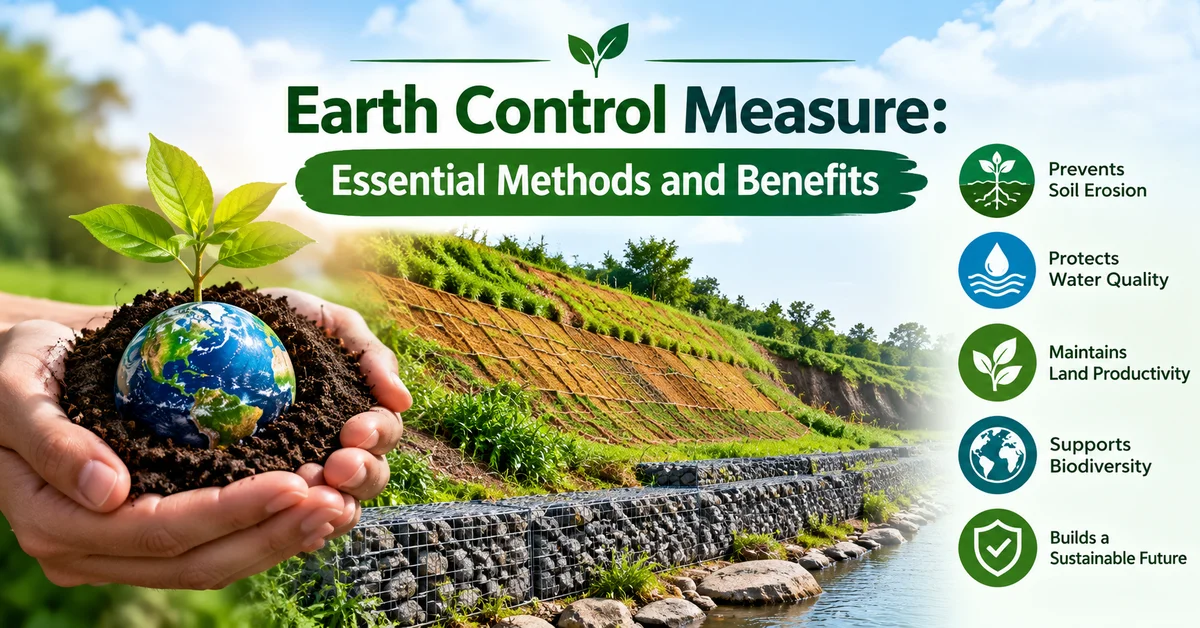
Earth Control Measure is a practical method used to manage soil, land, water movement, and ground conditions to prevent damage and maintain stability. The term can describe several related practices, including soil erosion control, sediment management, slope stabilization, drainage planning, and land rehabilitation. Its exact meaning depends on the setting, particularly whether the work involves construction, agriculture, or environmental protection.
Common earth control techniques include planting vegetation, installing erosion barriers, directing stormwater through safe drainage channels, and stabilizing exposed soil. Some methods rely on natural materials, while others use engineered products such as geotextiles, retaining structures, and erosion-control mats. The goal is to select a solution that addresses the actual risk rather than applying the same method everywhere.
The importance of Earth Control Measures becomes clear when rain, wind, excavation, or construction disturbs the ground. Unprotected soil can wash into streams, clog drainage systems, damage nearby properties, and reduce agricultural productivity. On steep or poorly drained sites, uncontrolled water movement may also contribute to slope instability.
Well-designed earth protection measures help reduce these risks while supporting Environmental Protection and responsible land use. They can protect infrastructure, preserve soil quality, and reduce maintenance expenses over time. However, their effectiveness depends on correct installation, regular inspections, and suitable maintenance.
Related: Kracensoft.com: Is It Legit and Safe to Use?
Types of Earth Control Measures
Soil Erosion and Sediment Control Methods
Soil erosion control measures prevent or reduce the movement of soil caused by rainfall, flowing water, or wind. Vegetation cover is one of the most useful options because plant roots hold soil together while leaves and ground cover reduce the impact of raindrops. Mulching, temporary ground covers, contour planting, and terracing can also help slow erosion.
Sediment control focuses on keeping displaced soil from leaving a worksite or entering nearby waterways. Silt fences, sediment traps, stabilized construction entrances, and properly designed settling basins may be used where appropriate. These measures work best when combined with erosion prevention because stopping soil from moving is usually more effective than trying to capture it afterward.
Land Stabilization and Drainage Techniques
Earth stabilization methods improve the ability of soil or slopes to remain stable under expected conditions. Depending on the site, solutions may include deep-rooted vegetation, engineered retaining walls, soil reinforcement, compaction, or geosynthetic materials. The correct choice depends on soil strength, slope angle, groundwater, loading, and other site-specific factors.
Drainage systems are equally important because excess water can weaken soil and increase erosion. Surface channels, lined drains, culverts, and subsurface drainage may direct water away from vulnerable areas. Drainage must be designed carefully: simply moving water elsewhere can create new erosion problems or increase flood risk downstream.
Key Benefits of Earth Control Measures
Protecting Soil Quality and Natural Resources
Healthy soil supports agriculture, vegetation, water filtration, and biodiversity. When erosion removes fertile topsoil, land productivity can decline and valuable nutrients may be lost. Soil Conservation practices such as mulching, cover cropping, reduced tillage, and contour farming help protect the soil structure and maintain its productive capacity.
Effective earth control solutions also support Natural Resource Management by protecting water, vegetation, and surrounding habitats. The Food and Agriculture Organization of the United Nations (FAO) promotes Sustainable Land Management (SLM) to maintain land productivity, restore degraded areas, and improve resilience to climate change.
Reducing Environmental Damage and Pollution
Uncontrolled soil movement can carry sediment, fertilizers, oils, and other pollutants into rivers and lakes. Sediment can cloud water, reduce light reaching aquatic plants, and damage fish habitats. Proper erosion prevention and sediment control reduce these risks by keeping loose soil in place and managing runoff before it reaches sensitive areas.
Other benefits include less dust, improved drainage, reduced damage to nearby properties, and lower long-term maintenance costs. When combined with thoughtful land planning, Earth Control Measures can contribute to environmental sustainability and ecological protection. Their success should be judged by measurable results, such as reduced sediment discharge, healthier vegetation, and fewer drainage problems.
Earth Control Measures in Construction
Managing Excavation, Runoff, and Sediment
Construction activities often expose soil by removing vegetation, grading land, digging foundations, and creating access roads. Rainfall can then carry loose sediment into storm drains and natural waterways. Earthwork control measures should therefore be installed before major ground disturbance begins, rather than after erosion becomes visible.
Construction teams may use temporary drainage channels, stabilized site entrances, sediment traps, silt fences, and covered soil stockpiles. The US Environmental Protection Agency (EPA) identifies erosion control, runoff control, sediment control, and good housekeeping as important categories of construction stormwater Best Management Practices (BMPs). Requirements vary by location, so project managers must follow the applicable permits and regulations.
Improving Site Safety and Ground Stability
Ground control techniques help reduce hazards associated with unstable soil, uncontrolled runoff, and poorly supported slopes. Proper grading, suitable compaction, safe excavation practices, and engineered retaining structures can improve site stability when designed for actual ground conditions. These measures also help protect workers, equipment, roads, and neighboring buildings.
However, surface erosion control alone cannot prevent every type of ground failure. Deep-seated slope movement, weak soil layers, high groundwater, and heavy structural loads may require geotechnical investigation and professional engineering. Excavations and retaining structures should be assessed by qualified professionals, particularly where failure could threaten people or nearby infrastructure.
Environmental Protection and Sustainability
Preventing Land Degradation and Water Pollution
Land degradation occurs when soil quality, vegetation, or the productive capacity of land declines. Causes include deforestation, overgrazing, poorly managed construction, excessive tillage, and inadequate water management. Earth protection measures address these problems by maintaining ground cover, controlling runoff, restoring damaged areas, and limiting unnecessary disturbance.
Stormwater Management is especially important in developed areas, where roofs, roads, and paved surfaces prevent rainwater from soaking naturally into the ground. Runoff may carry sediment and other pollutants into nearby water bodies. Green Infrastructure, including rain gardens, vegetated swales, and suitable permeable surfaces, can help manage runoff when local soil and drainage conditions allow.
Supporting Sustainable Land Management Practices
Sustainable land management combines environmental protection with the responsible use of land for farming, construction, and community development. It considers soil, water, plants, biodiversity, and long-term productivity rather than treating each issue separately. Practical approaches include maintaining vegetation, conserving water, restoring degraded soil, and planning land use according to its capabilities.
Organizations such as the United Nations (UN), the United Nations Environment Programme (UNEP), and the FAO support conservation, restoration, and sustainable resource use. UNEP explains that Ecosystem Restoration helps degraded ecosystems recover while conserving those that remain healthy. Reforestation, native vegetation recovery, and Land Rehabilitation can contribute to these goals when they suit the local ecosystem.
Earth Control Measures can also support Sustainable Development and Climate Change Mitigation. Healthy ecosystems may store carbon, protect biodiversity, and strengthen resilience to climate-related pressures. Nevertheless, individual projects should not claim climate benefits without considering the site, the method used, and evidence of actual outcomes.
Common Challenges and Practical Solutions
Frequent Problems When Implementing Control Measures
A common challenge is choosing a method that does not match the site. For example, a simple silt fence may be unsuitable for concentrated, fast-flowing water, while planting vegetation alone may not stabilize a steep slope with deep structural weaknesses. Poor installation, clogged drains, damaged barriers, and delayed maintenance can also reduce effectiveness.
Weather, limited budgets, difficult access, and a lack of trained workers may create additional problems. Another frequent mistake is focusing only on the visible erosion point instead of identifying where the water originates and how it travels across the site. A reliable plan evaluates the entire drainage area and considers possible effects on neighboring land and waterways.
Cost-Effective Strategies for Better Results
Prevention is often more economical than repairing erosion damage after it occurs. Preserving existing vegetation, limiting exposed soil, scheduling excavation carefully, and stabilizing completed sections promptly can reduce the amount of control equipment needed. Using suitable local materials may also lower transportation and replacement costs.
Projects should compare the initial installation cost with maintenance requirements, expected service life, environmental effects, and potential repair expenses. Combining vegetation with properly designed structural controls may provide better results than relying on a single method. The most cost-effective approach is the one that performs reliably under local conditions, not necessarily the one with the lowest purchase price.
Best Practices for Implementing Earth Control Measures
Planning, Site Assessment, and Risk Management
Begin with a site assessment that examines soil type, slope, existing vegetation, rainfall patterns, drainage routes, groundwater, and nearby water bodies. Identify areas where erosion, flooding, sediment movement, or ground instability could create problems. For complex projects, an Environmental Impact Assessment (EIA) may be required to identify potential environmental effects and appropriate safeguards.
Next, develop a practical control plan with clear responsibilities, suitable materials, installation stages, inspection schedules, and emergency procedures. Select measures according to the level of risk and applicable standards. Early planning helps teams avoid preventable damage, manage costs, and meet environmental requirements more efficiently.
Monitoring, Maintenance, and Continuous Improvement
Earth Control Measures require regular inspection to remain effective. Check barriers for damage, drains for blockages, slopes for new cracks, and vegetation for poor growth. After heavy rainfall, inspect vulnerable areas for sediment deposits, overflowing channels, exposed roots, and signs of water escaping its intended route.
Record findings and correct problems promptly. Replace damaged materials, remove accumulated sediment safely, and repair erosion before it spreads. Monitoring results can reveal whether the original design is working or needs adjustment. Continuous improvement makes Environmental Management more practical and helps ensure that controls remain effective throughout a project’s life.
Tools and Materials Used in Earth Control
Erosion Barriers, Geotextiles, and Vegetation
The materials used for earth control depend on the site’s risks, soil characteristics, budget, and environmental requirements. Silt fences, fiber rolls, compost barriers, erosion-control mats, and geotextiles are common options. These products can help retain sediment, protect exposed soil, or support vegetation establishment when correctly selected and installed.
Vegetation is another valuable tool. Grass, shrubs, and suitable native plants reduce raindrop impact and help bind soil through their roots. Mulch and biodegradable erosion-control blankets can protect bare ground while plants establish themselves. The EPA’s construction BMP guidance includes practices such as mulching, permanent seeding, geotextiles, and vegetated buffers. Materials should be selected with wildlife safety, durability, and disposal requirements in mind.
Drainage Systems and Soil Stabilization Materials
Drainage channels, culverts, catch basins, and subsurface drains help control water movement. Their design should account for expected rainfall, the amount of runoff, ground conditions, and the capacity of the receiving drainage system. Poorly designed outlets can concentrate flow and cause erosion elsewhere, so discharge points require careful attention.
For Soil Stabilization, engineers may specify compacted granular materials, geogrids, geotextiles, retaining structures, or approved soil amendments. The right choice depends on the intended use and engineering requirements. For example, a garden slope may benefit from vegetation and surface drainage, while a road embankment may require a more comprehensive engineered solution. No single material is appropriate for every site.
Related: MataRecycler: Features, Benefits, and How It Works
Frequently Asked Questions
What is an Earth Control Measure?
An Earth Control Measure is a method used to manage soil, water movement, erosion, or ground stability. Common examples include vegetation cover, sediment barriers, drainage channels, and slope stabilization systems.
What are the main types of Earth Control Measures?
The main types include soil erosion prevention, sediment control, stormwater management, soil stabilization, drainage improvements, and land restoration. The most suitable option depends on site conditions and the problem being addressed.
Why are Earth Control Measures important in construction?
They help prevent soil from washing away, reduce sediment pollution, manage stormwater, and protect nearby infrastructure. They can also reduce maintenance costs and support compliance with applicable environmental regulations.
Which earth control method is most effective?
There is no single method that works best everywhere. Vegetation may suit some slopes, while silt fences, sediment basins, engineered drainage, or retaining structures may be needed elsewhere. A site assessment helps determine the appropriate combination.
How can Earth Control Measures protect the environment?
They reduce soil loss, limit sediment entering waterways, support healthy vegetation, and help manage runoff. When properly planned and maintained, they contribute to soil conservation, ecosystem protection, and sustainable land management.
Summary
Earth Control Measures are essential tools for protecting soil, managing water, and maintaining stable land. From erosion barriers and vegetation cover to engineered drainage and slope stabilization, these methods help reduce environmental damage while supporting safer construction and productive landscapes. Their greatest value comes from using the right combination of techniques for the conditions at hand.
Looking ahead, better site assessment, sustainable materials, Green Infrastructure, and improved monitoring can make earth management practices more effective. Cooperation among landowners, engineers, environmental specialists, and public authorities can strengthen these efforts. By prioritizing prevention, responsible planning, and ongoing maintenance, communities can protect natural resources and support a healthier environment for future generations.