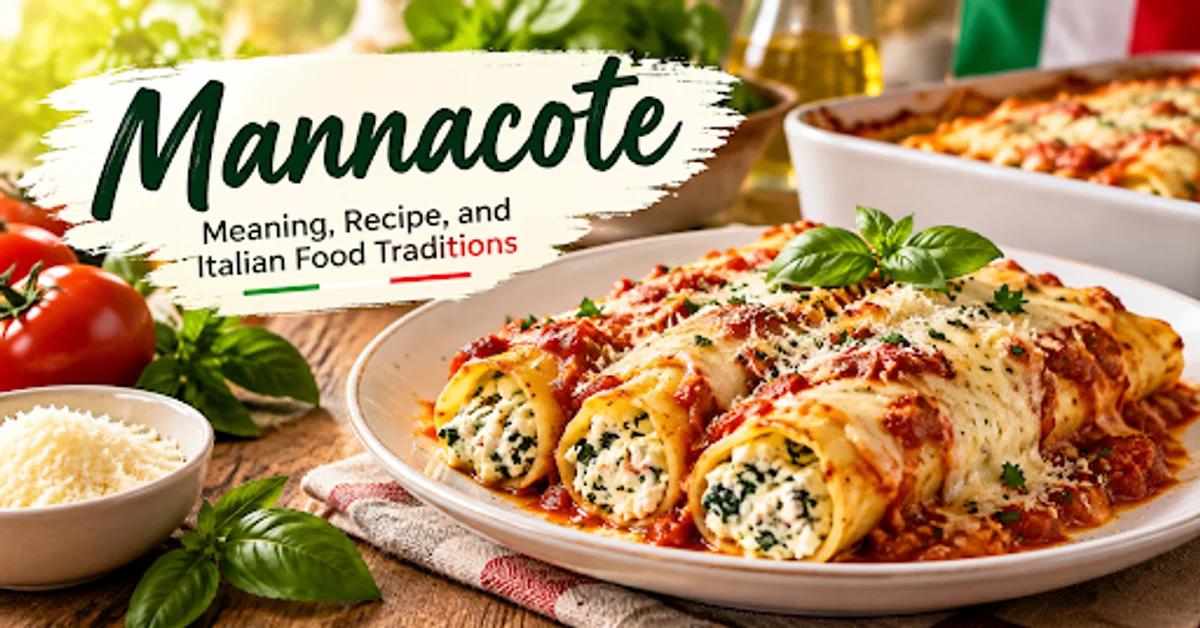
Mannacote refers to a stuffed pasta dish commonly associated with manicotti. It typically consists of pasta tubes filled with a rich mixture of cheeses, herbs, and sometimes vegetables or meat. The filled pasta is arranged in a baking dish, covered with sauce, topped with cheese, and cooked until tender and golden.
The Mannacote meaning is closely connected with comfort food, homemade meals, and Italian-American culinary traditions. While the spelling may appear in informal food writing or family conversations, it is important to recognize that manicotti is the more widely established name for this dish. Mannacote can therefore be understood as a familiar, informal variation rather than a separately verified Italian culinary term.
Manicotti is a popular Italian-American pasta dish made with large pasta tubes or thin pasta crepes. These are filled with ingredients such as ricotta cheese, mozzarella cheese, Parmesan cheese, and spinach before being baked with tomato sauce. Mannacote follows essentially the same preparation and flavor profile.
The difference is mainly in the name. Cannelloni is another related stuffed pasta, often prepared with pasta sheets rolled around a filling. Although manicotti and cannelloni share many ingredients and techniques, their shapes and traditional preparations can differ. Understanding these similarities helps readers explore Mannacote without confusing an informal spelling with an officially distinct dish.
Related: 785 Area Code: Everything You Need to Know
The Origin and History of Mannacote
Italian-American Culinary Traditions
The Mannacote origin is often explained through the evolution of family language and cooking traditions. Italian immigrants brought recipes, ingredients, and culinary customs to the United States, where families adapted familiar dishes to local ingredients and changing lifestyles. Over time, pronunciation and spelling could vary between households and communities.
Stuffed pasta reflects a broader Italian cooking tradition, including dishes prepared al forno, meaning baked in the oven. Southern Italy, including Campania, has a rich culinary heritage built around pasta, tomatoes, cheeses, olive oil, and herbs. However, a direct historical connection between the specific spelling Mannacote and a particular Italian region has not been firmly established.
How Family Recipes Shaped Mannacote
Family recipes often change naturally as they pass from one generation to another. One cook might prefer a creamy ricotta filling, while another adds spinach, ground beef, or Italian sausage. These small differences make homemade pasta dishes personal and meaningful, even when families begin with the same basic recipe.
Mannacote can represent this spirit of adaptation. A familiar dish may acquire a distinctive name through pronunciation, family stories, or local habits. Although individual histories would be needed to verify the origin of the word in a particular household, the wider tradition of preserving recipes through shared meals is an important part of Italian-American cuisine.
Traditional Mannacote Ingredients
Essential Cheeses, Pasta, and Sauces
A traditional-style Mannacote recipe requires a few simple ingredients that work together to create a rich, satisfying meal. Manicotti pasta shells provide the structure, while ricotta cheese creates a soft and creamy filling. Shredded mozzarella adds a stretchy texture, and grated Parmesan cheese brings a salty, savory flavor.
Marinara sauce provides acidity and balances the richness of the cheese. Fresh or dried Italian herbs, such as basil and oregano, add aroma, while an egg can help bind the filling. Olive oil is useful for preparing the baking dish or sautéing additional ingredients. These components create the familiar flavor of cheese-filled, oven-baked pasta.
Optional Ingredients for Extra Flavor
Mannacote ingredients can be adjusted to suit different tastes. Spinach adds color and earthy flavor, while mushrooms provide a savory quality. Ground beef, Italian sausage, or shredded cooked chicken can make the filling more substantial. Garlic, black pepper, and fresh parsley also enhance the overall taste.
For a richer variation, cooks can replace tomato sauce with béchamel sauce or Alfredo sauce. Those who enjoy spicy food may add chili flakes or a small amount of spicy sausage. Calabrian cuisine is known for bold flavors and ingredients such as ‘nduja, a spreadable spicy pork sausage. These ingredients can inspire a modern variation, although they are not essential to traditional Mannacote.
How to Make Mannacote at Home
Preparing the Pasta and Cheese Filling
Making Mannacote at home is straightforward when the ingredients are prepared before assembly. For a basic recipe, gather approximately 12 manicotti shells, 2 cups of ricotta cheese, 1 cup of shredded mozzarella, half a cup of grated Parmesan, 1 egg, 2 cups of marinara sauce, and Italian herbs to taste. Adjust quantities according to the pasta package and the number of servings required.
Cook the pasta according to the package directions, stopping when it is just tender but still firm enough to handle. Drain carefully and allow the shells to cool. In a bowl, combine the ricotta, half the mozzarella, Parmesan, egg, herbs, and a little black pepper. If using spinach, cook it first and squeeze away excess moisture to prevent a watery filling.
Stuffing, Assembling, and Baking Mannacote
Spread a thin layer of marinara sauce across the bottom of a baking dish. Fill each pasta shell carefully with the cheese mixture, using a small spoon or piping bag. Arrange the filled shells in a single layer, then cover them with the remaining sauce and mozzarella.
Cover the dish with foil and bake in a preheated oven at 375°F (190°C) for approximately 30 minutes. Remove the foil and bake for another 10–15 minutes, until the sauce bubbles and the cheese turns lightly golden. Cooking time may vary with the pasta, dish size, and oven, so check that the center is thoroughly hot. Let the dish rest for five to ten minutes before serving.
Popular Mannacote Recipe Variations
Vegetarian and Spinach-Stuffed Mannacote
Vegetarian Mannacote is an excellent choice for people who enjoy rich flavors without meat. Combine ricotta, mozzarella, Parmesan, and cooked spinach for a classic filling. Mushrooms, finely chopped artichokes, or roasted vegetables can also add texture and variety. A simple homemade marinara sauce keeps the dish bright and flavorful.
For a more balanced meal, include a generous portion of vegetables alongside the pasta. Fresh basil, parsley, and oregano provide fragrance without requiring complicated seasoning. If you are cooking for vegetarian guests, check that the cheeses are made with suitable vegetarian-friendly ingredients, because some traditional cheeses use animal-derived rennet.
Meat-Filled and Creamy White-Sauce Mannacote
Mannacote with meat is a hearty option for a family-style Italian dinner. Brown ground beef or Italian sausage with garlic and a little olive oil, then allow it to cool before mixing it with ricotta and herbs. Drain excess fat and avoid adding too much liquid to the filling. A tomato-based sauce complements the savory meat and keeps the finished pasta moist.
For a creamy alternative, use béchamel or Alfredo sauce instead of marinara. Béchamel offers a smooth, mild base, while Alfredo generally provides a richer, buttery flavor. A small amount of Parmesan on top helps create a flavorful crust. For a spicy version, a little ‘nduja or chili flakes can add heat, but use them sparingly so they do not overwhelm the cheese.
Tips for Making Perfect Mannacote
Choosing the Right Pasta and Filling Consistency
Good pasta and a well-balanced filling are the foundations of successful Mannacote. Choose manicotti shells that are large enough to hold the filling without tearing. Cook them only until just tender, because overcooked shells can split during stuffing and baking. If your pasta package offers specific instructions for baked recipes, follow those directions.
The ricotta filling should be creamy but not watery. Drain wet ricotta if necessary, and squeeze moisture from cooked vegetables before mixing them in. A piping bag or a sturdy food-storage bag with a small corner cut off can make filling the shells easier. Work gently to avoid breaking the pasta, and leave enough room for the filling to spread slightly as it heats.
Baking Time, Temperature, and Storage Tips
Consistent oven temperature helps the sauce heat evenly and the cheese melt properly. Baking at 375°F (190°C) is a useful starting point for a typical dish of prepared manicotti. Keep the pasta covered during the first stage to retain moisture, then uncover it toward the end for golden melted cheese. Allowing the dish to rest before serving also helps the filling settle.
Mannacote is suitable for make-ahead pasta dishes. Assemble it, cover it, and refrigerate it if you plan to bake it soon. Because the dish contains cheese and possibly meat or egg, refrigerate leftovers within two hours and use them within three to four days. Freeze leftovers in airtight, freezer-safe containers for longer storage. Reheat thoroughly to 165°F (74°C); thaw frozen portions in the refrigerator when practical, and allow extra baking time if cooking a chilled assembled dish.
What to Serve with Mannacote
Best Side Dishes and Salads
Mannacote is rich and filling, so fresh and lightly seasoned side dishes make an excellent match. Garlic bread is a classic choice because it can soak up extra marinara sauce. A green salad with arugula, lettuce, cucumber, and a simple lemon dressing provides freshness and contrast.
Roasted vegetables such as zucchini, bell peppers, broccoli, or asparagus also pair well with stuffed pasta. Their natural sweetness and slightly crisp texture balance the softness of the cheese filling. For a larger gathering, serve Mannacote with a simple appetizer and a vegetable side rather than adding several heavy dishes.
Sauces, Seasonings, and Pairing Ideas
The sauce determines much of the final character of Mannacote. Marinara delivers a familiar tomato flavor, while béchamel creates a smooth, creamy finish. Alfredo sauce works for those who prefer a richer dish, though its heavier texture may benefit from fresh herbs or a vegetable side.
Basil, oregano, parsley, black pepper, and garlic are useful seasonings. Add them gradually to maintain balance between the sauce and filling. Adults who enjoy wine may choose a medium-bodied red such as Sangiovese, which can complement tomato-based pasta. Wine is optional; sparkling water, lemonade, or another preferred nonalcoholic drink works just as well.
Is Mannacote Healthy?
Nutritional Value and Main Ingredients
Mannacote can contribute carbohydrates, protein, calcium, and other nutrients to a balanced meal. Pasta supplies carbohydrates, while ricotta, mozzarella, and Parmesan contribute protein and calcium. Adding spinach or other vegetables increases the dish’s fiber and micronutrient content.
Its nutritional profile depends on portion size, cheese quantities, sauce, and optional meat. Generous amounts of cheese can increase saturated fat and sodium, while processed or heavily seasoned meats may contribute additional sodium. Rather than treating Mannacote as either inherently healthy or unhealthy, consider the ingredients, preparation method, and overall balance of the meal.
Lighter and Gluten-Free Alternatives
A lighter Mannacote recipe can use part-skim ricotta and mozzarella, extra vegetables, and a moderate amount of Parmesan. Choosing a tomato-based sauce instead of a heavy cream sauce may also reduce richness. Serve a moderate portion with salad or roasted vegetables to make the meal more balanced.
For people avoiding gluten, use certified gluten-free manicotti-style pasta or suitable gluten-free pasta sheets. Check the labels of sauces, seasonings, and packaged ingredients, since formulations can differ. Those with celiac disease should also prevent cross-contact with regular pasta and contaminated cooking equipment. Gluten-free alternatives may have different textures, so follow their package instructions closely.
Why Mannacote Remains a Family Favorite
Comfort Food, Family Gatherings, and Traditions
Mannacote reflects the appeal of comfort food: familiar ingredients, a warm oven, and a dish designed to be shared. Its layers of pasta, sauce, and cheese create a satisfying meal that works for ordinary dinners as well as birthdays, holidays, and family gatherings. The recipe is also flexible enough to accommodate different preferences at the same table.
The emotional value of a dish often comes from the people who prepare and share it. A particular filling, sauce, or seasoning may remind someone of childhood meals or a relative’s kitchen. Mannacote can become part of that experience when families make it together, exchange cooking tips, and adapt recipes to their own tastes.
Make-Ahead Meals and Sharing Homemade Recipes
One practical advantage of Mannacote is that it can be prepared in advance. Assemble the pasta and sauce ahead of time, refrigerate it safely, and bake it when needed. This makes it useful for busy evenings, potlucks, and gatherings where the host wants to spend less time cooking after guests arrive.
It can also be portioned and frozen, making leftovers easier to enjoy later. Write down ingredient quantities, cooking times, and successful variations so the recipe can be repeated consistently. Sharing those details helps preserve family cooking traditions while leaving room for new ideas. Whether prepared with spinach, meat, or a classic ricotta filling, homemade Mannacote can be adapted for many occasions.
Related: Target Company URL Research: Complete Guide
Frequently Asked Questions
What is Mannacote?
Mannacote is commonly described as an informal variation of manicotti, an Italian-American dish made with stuffed pasta, cheese, sauce, and seasonings, then baked.
Is Mannacote the same as manicotti?
In most food descriptions using the term, yes. Mannacote is presented as an alternative spelling, while manicotti is the established name commonly used in Italian-American cooking.
What are the main Mannacote ingredients?
Typical ingredients include manicotti pasta, ricotta cheese, mozzarella, Parmesan, marinara sauce, an egg, and Italian herbs. Spinach or meat can be added.
Can I prepare Mannacote ahead of time?
Yes. Assemble the dish, cover it, and refrigerate it until baking. Keep it refrigerated safely and allow extra cooking time if it goes into the oven cold.
Can Mannacote be frozen?
Yes. Store it in an airtight, freezer-safe container. Thaw it in the refrigerator when possible and reheat until the center reaches 165°F (74°C).
Summary
Mannacote offers a delicious way to explore the familiar world of stuffed pasta. Often associated with manicotti, it combines pasta, creamy cheese filling, flavorful sauce, and oven baking in a dish that is both satisfying and adaptable. Its appeal lies in simple ingredients, flexible preparation, and the pleasure of sharing a homemade meal.
Although the exact historical origin of the spelling Mannacote remains uncertain, the culinary tradition it describes is easy to appreciate. Start with a classic ricotta filling, experiment with vegetables or meat, and choose a sauce that suits your taste. With thoughtful preparation and fresh ingredients, Mannacote can bring warmth, flavor, and a sense of togetherness to your table.