A blip in the power supply can cut off much more than a few light bulbs in our homes. Refrigerators stop working, internet connection goes away, security systems may go down, and critical appliances may lose power exactly when you need them most. A business is capable of getting interrupted even for a very short period will lead to all possible issues like the customer service, operation of equipment, loss of productivity and income. As electricity reliability becomes a growing challenge, property owners are searching for better options available to sustain power access when the grid fails.
Battery storage systems can be a practical solution, capturing energy and making it available when the normal utility service is compromised. These systems can be paired with solar panels to capture energy during daylight hours and deploy it at a later time, even during some unforeseen blackouts. Homeowners interested in Solar Panel Installation Services howard-county should learn how solar generation and battery technology combine to give you a much greater degree of energy independence.
How Battery Storage Systems Make Sure That Electricity Is Always Available
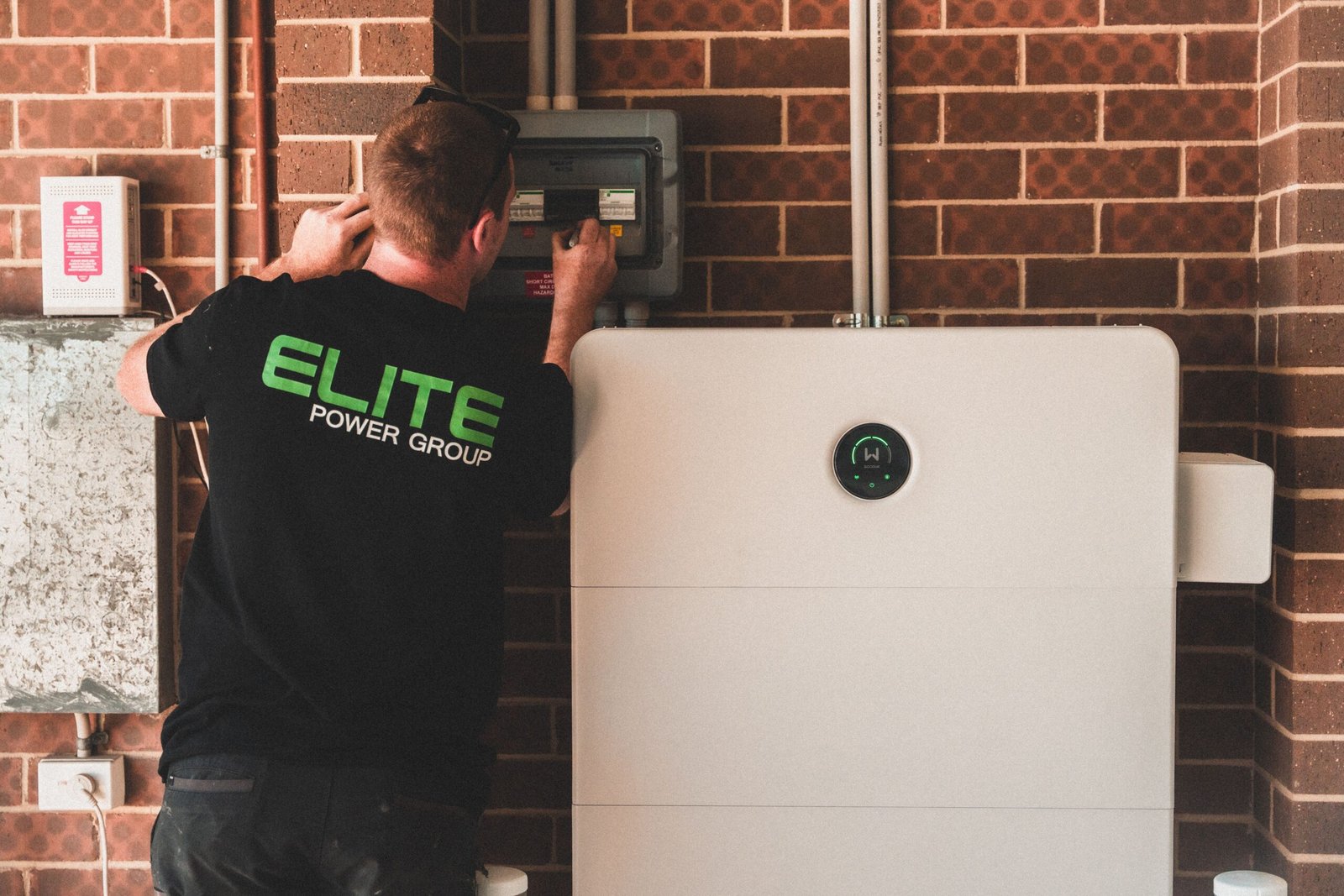
A battery storage system is a device that consumes electrical energy and stores it for later use, in provision of selected appliances or free electrical circuits. The major difference being, while a generator has to burn fuel to turn into electricity (electric generators produce), a battery provides power with energy already stored.
For solar, panels produce energy from the sun during the day. The system can cater to household or building loads, and excess energy will charge batteries depending on the configuration of the DCIM system.
A compatible device can separate from the utility grid when there is an outage, and only feed electricity to a few identified circuits with suitable backup equipment. Typically, this process is handled via an automatic transfer switch or through built-in inverter controls.
Depending on the battery capacity, inverter ratings, installation design, and connected loads to the system, this backup capability always varies.
Common applications include:
- Maintaining Critical Lights and Electrical Outlets
- Keeping refrigerator and freezer powered.
- Relevant data comms infrastructure is ready, like internet routers and communication equipment.
- Operating a few chosen medical or home office equipment.
- Energizing security devices like cameras and alarms.
- Ensures Business Continuity Even with Mishaps.
A properly designed battery system ensures that property owners focus on powering devices that need it most, rather than trying to power everything without fully considering capacity.
The Synergistic Benefit of Solar and Battery Storage
Battery storage can run alone as power, when solely charged through the electrical grid, or in combination with solar panels. The rationale for this is straightforward: Any solar system benefits from incorporating a battery, not just being able to utilize the sunlight during daytime hours.
Solar panels generate Solar Installation Company in Richmond during their normal operation; this can be used for instant consumption and charging the battery. Stored energy is used to supply selected loads in the event of an outage. If a compatible solar-plus-storage system provides power when the sun is shining, it could continue to operate during an outage and recharge the battery on its own while supporting designated circuits.
This combination is especially helpful when interruptions may last for a while. A battery recharged only from the grid can go flat too, once its stored energy is discharged for long enough. Solar production is limited by the weather, daylight hours, shading from trees and buildings, and household consumption; but additional solar generation may allow for backup availability to be extended over longer periods.
How to choose the best battery capacity for your home
Choosing battery capacity is not as simple as estimating the number of appliances in a building. Property owners need to map out what equipment needs to stay on, how much electricity it draws, and for how long backup power may be needed.
A storage solution for air conditioning, electric cooking appliances, and multiple big appliances acting at the same time will be different than one that continues to keep a refrigerator and some lights and a router of selected outlets on.
High-level — there are two such measures — kilowatt-hours (kWh) and kilowatts (kW). Kilowatt-hours tell you how much energy a battery is capable of holding; kilowatts tell you the instantaneous power it can deliver.
A battery may be able to store enough energy to power some basic appliances for several hours, but might not also have sufficient power output rating to turn on a demanding appliance.
When evaluating battery options, consider:
- Total capacity isn’t total usable — you care more about usable.
- Continuous and peak power output.
- Expected backup duration.
- Essential appliance starting requirements.
- Battery chemistries and operating temperature range.
- Warranties, Manufacturer & Expected Life
- Space, ventilation, and installation requirements.
A professional load assessment can ascertain the suitable battery size and save owners from wasting money on storage capacity that a property does not require.
Smart Technologies and Automated Backup Management
Modern battery systems rely on sophisticated electronics to handle charging and discharging, as well as distribution of electricity. The energy management software monitors power flows and decides when the stored energy should be used.
Most systems have mobile apps that show the battery state of charge (SOC), solar production, home loads, and grid state. This helps owners know how much backup energy is left and can alert them if systems experience unexpected drops in performance.
A kind of automatic backup has also become essential. The system automatically detects a grid interruption and switches selected electrical circuits to battery power with no owner intervention required to operate a generator, depending on the equipment.
Other systems also offer adjustable backup preferences. Battery owners may also reserve a portion of battery capacity for emergencies while utilizing the other energy for regular day-to-day electricity.
Battery Storage Backup Systems Estimation Table
| Battery Storage & Backup Scope | Essential Loads Backup ($) | Whole-Home / Heavy Load Backup ($) | Article Context & Financial Impact |
| 📊 [Engineer: Load & Circuit Audit] Critical Load Assessment & Circuit Mapping | $800 | $1,200 | Mapping required runtime and starting wattage (kW) for critical circuits (fridge, lights, router, medical devices) versus heavy HVAC/cooking appliances. |
| 🔋 [Installer: Usable kWh & Peak kW] Battery Storage Hardware (kWh Capacity) | $8,500 | $18,500 | Sizing usable energy capacity (kWh) and continuous/peak power output (kW) to prevent overspending on unused capacity or underpowering demanding appliances. |
| ⚡ [Installer: Grid Isolation & Switching] Hybrid Inverter & Automatic Transfer Switch | $2,500 | $4,200 | Integrating an automatic transfer switch and compatible inverter controls to seamlessly isolate from the utility grid and allow solar panels to recharge batteries during outages. |
| 🛡️ [Contractor: Thermal & Panel Prep] Safety Clearances, Ventilation & Panel Prep | $1,200 | $2,200 | Ensuring electrical panel compatibility, fire-code clearances, physical protection, and ambient temperature limits (around 25°C) for optimal battery life. |
| 📱 [Technician: Permits & Smart Software] Permits, Testing & Smart App Commissioning | $1,500 | $2,400 | Securing building/electrical permits, testing backup circuit failover, and configuring mobile app State-of-Charge (SOC) tracking and emergency reserve settings. |
| 📊 [Manager: Total Backup Budget Summary] Total Solar-Plus-Storage Backup Investment | $14,500 | $28,500 | Delivers instant, fuel-free power during unexpected blackouts while extending multi-day outage resilience when paired with daytime solar recharging. |
Useful technology features include:
- Live tracking: Provides a view of energy generation, amount consumed, and battery levels.
- Automatic transfer switches: Aid in purposeful power restoration to supported auxiliary circuits after an outage.
- Load Management — The process of prioritizing what’s most important when stored energy is minimal.
- External Alerts: Send alerts to the users regarding the conditions of the system and possible errors in the device.
- Scheduled charging: Helps adjust the charging behavior according to energy needs and utility rates.
Some of these features add to the convenience, provided it is correctly configured. Backup circuit, protector, and transfer equipment should always be set up and tested by professionals.
Installation Preparation, Safety and Lasting Value
Battery storage is an electrical installation (battery not included). Property owners should also consider the location of the battery, whether their electrical panel is compatible with a power wall, if they have solar installed already, and what building and fire safety codes apply before purchasing equipment.
The physical location of the battery is important because equipment needs to run within defined manufacturer temperature and environmental operating limits. Installers should account for maintenance access, protection from physical damage, and any clearances that are needed.
We equally focus on the financial side of the business. A battery is an additional expense to a solar project from day one, which means potential buyers should weigh its projected value against the cost. For some homes, it is backup power that is the primary focus. Some may want to tap the previously stored power at times when utility rates peak, while others will want to up their self-consumption of solar generation.
Here are a few key points to review before approving an installation:
- Confirm the Circuits Being Supported
- If so, find out how long the necessary appliances can run
- Consider the usable capacity of the battery at a manufacturer’s specified ambient temperature (typically 25°C) and output rating.
- WARRANTY COVERAGE and terms of replacement.
- Check if the solar panels can recharge the battery during an outage
- Check construction permit & Electrical safety
- Ask for a straightforward definition of monitoring and maintenance.
Having an experienced provider also guarantees the battery, inverter, solar panels, and electrical panel work as part of one interconnected system. If you own property and are considering hiring residential solar installation services Virginia, ask for comparative specifications of equipment and backup arrangements support, as well as installation.
If you have a home and want to install solar panels, residential solar installation services in Virginia can be useful in assessing property conditions, energy needs, and optimal system configurations for complete solar-plus-storage projects. When you require backup electrical power for basic appliances or throughout a long time period, specialist organizing comes to be extremely valuable.
Final Thoughts
Battery storage solutions offer homeowners a practical solution to be prepared for unexpected power outages. They provide power by storing energy and then releasing it when the grid is unavailable for critical appliances, communication systems, and certain business processes.
The most favourable outcomes are derived from selecting an optimum battery capacity, compatible inverter technology,y together with a robust backup configuration. By adding solar generation, the system could recharge during the day and for many hours longer than would normally be possible. With appliance-grade installation and realistic energy forecasting, battery storage can contribute as a sought-after element of a larger, reliable, and adaptable energy source.
Frequently Asked Questions
Power supply from the battery storage system during a blackout
Yes. When the utility grid is down, a properly configured battery system in conjunction with compatible backup equipment can provide electricity to designated circuits.
How Long Does a Solar Battery Last to Power a Home?
Backup timing can rely on battery capacity, consumption and power demand, appliances being utilized, and whether solar panels will charge the battery in a blackout.
Can I use solar panels when the power goes out?
Grid-tied solar systems turn off during an outage in most cases to prevent transformers and nearby equipment from being damaged on the electrical grid. But systems equipped with battery storage and backup machinery may still produce electricity.
Is Maintenance Needed for Battery Storage?
Compared to older systems, most modern battery systems need very little maintenance, but owners will still want to monitor their system performance, refer to the manufacturer for specific advice on care, and possibly arrange professional inspections.