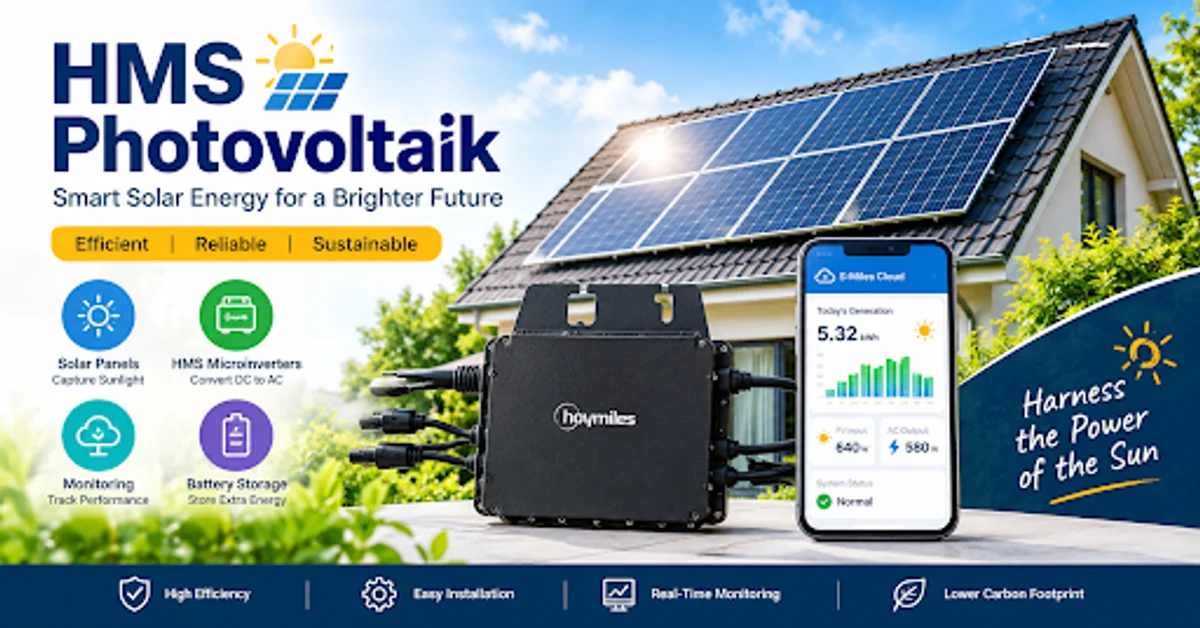
HMS Photovoltaik is the German term for photovoltaics, the technology that converts sunlight directly into electricity. HMS is associated with the HMS Series of microinverters produced by Hoymiles, a solar technology company. Therefore, HMS Photovoltaik can describe solar installations that use HMS microinverter technology, although the phrase itself does not necessarily identify one registered company or a single standardized system.
A complete HMS Photovoltaik system may include solar panels, microinverters, electrical protection equipment, monitoring tools, and optional battery storage. The exact components depend on the model and installation design. Buyers should check manufacturer documentation to confirm that a particular product belongs to the genuine HMS range.
A solar panel contains photovoltaic cells that absorb sunlight and generate direct current (DC). An inverter converts that electricity into alternating current (AC), which most household appliances use. The system may supply electricity directly to a home, export surplus energy to the grid where permitted, or work with compatible storage equipment.
Photovoltaic performance depends on sunlight, temperature, panel orientation, shading, equipment quality, and installation conditions. A well-designed system uses these factors to estimate realistic energy production rather than promising the same output every day.
Related: Target Company URL Research: Complete Guide
How Does the HMS Photovoltaik System Work?
The Role of Solar Panels and Microinverters
In an HMS Photovoltaik system, solar panels capture sunlight and produce DC electricity. A compatible microinverter is installed as part of the solar array and converts the generated electricity into grid-compatible AC under the system’s approved operating conditions. Unlike a conventional string inverter, which handles electricity from several panels together, a microinverter can manage the output of individual connected panels or modules, depending on its design.
This approach can be useful when panels experience different levels of sunlight. For example, a roof with partial shading in the morning may benefit from panel-level power conversion. However, the actual improvement depends on the shading pattern, equipment specifications, and overall system design.
Converting Solar Energy Into Usable Electricity
The conversion process involves more than simply changing DC into AC. Inverter electronics must also manage voltage, frequency, electrical protection, and synchronization with the grid. Grid-connected systems are designed to follow applicable safety standards and typically stop supplying the grid during a power outage unless a specifically designed backup arrangement is installed.
Some photovoltaic installations also incorporate solar battery storage. Whether an HMS-based system supports a particular battery or backup configuration must be confirmed through the relevant product documentation. A microinverter should not automatically be assumed to provide whole-home backup power.
Key Features of HMS Photovoltaik
Microinverter Efficiency and Performance
The HMS Series includes models such as the HMS-800-2T and HMS-1000-2T. These are two-panel microinverters designed to manage the electricity generated by compatible photovoltaic modules. The appropriate model depends on panel electrical characteristics, expected output, and local grid requirements. Hoymiles publishes model-specific technical specifications that buyers should review before purchasing.
An important feature is Maximum Power Point Tracking (MPPT). This technology helps a solar panel operate near the electrical point where it can produce the most power under current conditions. Depending on the specific HMS model, MPPT arrangements may differ, so buyers should verify the number of independent tracking channels rather than assuming every inverter offers the same configuration.
Solar Monitoring and Energy Optimization
A solar monitoring system makes it easier to understand how much electricity an installation produces. Hoymiles offers S-Miles Cloud, a platform that can display production data, report device status, and help identify performance issues. Depending on the equipment and configuration, users may also access module-level monitoring.
Monitoring can help homeowners notice unusual production drops, communication problems, or equipment faults earlier. However, internet connectivity and compatible communication equipment may be required for remote access. Monitoring also does not guarantee maximum solar power optimization: panel placement, cleaning, shading, and correct system design remain essential.
Benefits of HMS Photovoltaik
Improving Household Energy Efficiency
One of the main HMS Photovoltaik benefits is the ability to manage solar production at the panel level. If one panel receives less sunlight than another, a suitable microinverter arrangement can help reduce the impact on the rest of the array compared with some traditional string configurations. The result depends on the system design and the conditions affecting each panel.
For households, generating electricity during daylight can reduce the amount purchased from the utility. The greatest savings often occur when solar production overlaps with household demand, such as running washing machines, cooling systems, or other appliances during sunny hours. Actual savings depend on electricity prices, system size, seasonal sunlight, and local rules for exporting surplus power.
Supporting Renewable Energy and Sustainability
Photovoltaic systems produce electricity without burning fuel during operation. This helps diversify the energy supply and can reduce operational greenhouse gas emissions compared with electricity generated from fossil fuels. The overall environmental benefit also depends on manufacturing, transportation, installation, equipment lifespan, and eventual recycling.
Distributed generation is another advantage of rooftop solar. Instead of producing all electricity at a distant power station, homes and businesses can generate some of their own energy close to where it is consumed. When properly designed and connected, an HMS photovoltaic system can contribute to this wider transition toward renewable energy and more sustainable electricity.
HMS Photovoltaik Installation Process
Choosing the Right Solar Equipment
Choosing suitable equipment begins with an assessment of energy consumption, available roof or balcony space, local sunlight, and the property’s electrical system. Buyers should compare panel wattage, inverter output, maximum input voltage, input current, MPPT configuration, temperature limits, protection ratings, and grid compatibility. These HMS inverter specifications are more useful for a purchasing decision than the model name alone.
For example, the HMS-800-2T and HMS-1000-2T belong to the same general product family, but they are not interchangeable in every installation. The connected panels must remain within the selected model’s electrical limits. A qualified installer can calculate the expected solar electricity production and determine whether the equipment suits the intended application.
Installation, Setup, and System Monitoring
HMS inverter installation should follow the manufacturer’s instructions, applicable electrical codes, and local grid-connection requirements. The installer checks mounting positions, wiring, connectors, grounding where required, weather protection, and electrical isolation. Correct installation protects equipment and helps ensure dependable operation over time.
After installation, the system is commissioned and tested. Where applicable, the communication gateway or built-in communication functions are configured, and the monitoring platform is connected. The installer should explain how to view production, recognize alerts, and request support. Electrical work involving grid connections should be performed by an appropriately qualified professional rather than improvised as a do-it-yourself project.
HMS Photovoltaik Costs and Maintenance
Factors That Affect Installation Costs
The HMS microinverter price varies with model, seller, country, taxes, shipping, and warranty terms. The final cost of a complete system also includes solar panels, mounting hardware, electrical protection, wiring, labor, monitoring accessories, and any required grid upgrades. Battery storage adds another expense when included.
Rather than comparing inverter prices alone, request itemized quotations for the entire installation. Check whether the quote includes commissioning, monitoring equipment, permits, and after-sales support. A lower initial price may not represent the best value if it comes with limited warranty coverage or difficult access to replacement parts.
Maintenance Requirements and Long-Term Savings
Solar systems generally require less routine maintenance than many fuel-based power systems, but they are not maintenance-free. Dust, leaves, bird droppings, shading, loose connections, damaged cables, and communication faults can affect performance. Regular visual checks and monitoring reports can help identify developing issues.
Long-term solar energy savings depend on actual generation, self-consumption, utility rates, maintenance, and the service life of the components. Keep purchase documents, model numbers, installation records, and warranty information in a safe place. Use qualified technicians for electrical inspections or repairs, and follow the panel manufacturer’s guidance for cleaning.
HMS Photovoltaik vs. Traditional Solar Inverters
Differences in Performance and Energy Management
A traditional string inverter converts DC electricity from several connected solar panels in one central location. A microinverter performs conversion closer to the panels. This difference affects installation design, monitoring, maintenance, and how shading influences overall energy production. Microinverters can offer advantages when panels face different directions or experience uneven sunlight, although they are not automatically the best choice for every property.
HMS microinverters can also simplify panel-level performance monitoring when supported by the installed equipment. String inverters may offer a simpler arrangement for some large, unshaded arrays. The best option depends on system size, installation costs, expansion plans, and the value of individual-panel monitoring.
Which Solar Inverter System Is Better for Your Needs?
For a small residential installation, balcony solar power project, or roof with multiple orientations, a compatible microinverter may provide useful flexibility. For a larger installation with consistent sunlight and straightforward wiring, a string inverter could offer better overall value.
Compare the full system cost, conversion efficiency, warranties, replacement procedures, and local service availability. Consider future expansion and battery compatibility, too. A qualified installer can compare expected annual production and lifetime costs to identify the most suitable arrangement for your property.
Common Challenges and Limitations
Potential Technical and Installation Issues
HMS Photovoltaik systems still depend on good installation, compatible equipment, and suitable environmental conditions. Excessive shading, poorly matched panels, damaged connectors, communication interruptions, or unsuitable electrical connections can affect production and reliability.
Microinverters are installed near the solar array, where access may be more difficult than for an indoor inverter. If a unit needs replacement, a technician may need to access the roof or mounting structure. Monitoring problems can also result from a disconnected gateway or weak wireless signals rather than a failure of the solar panels themselves.
Compatibility, Warranty, and Safety Considerations
Before buying, verify the precise model, electrical ratings, supported communication equipment, applicable grid certifications, and warranty conditions. A model sold for one region may not be approved for another region’s voltage, frequency, or grid requirements. Product documentation should always take priority over general online descriptions.
Never assume that solar panels continue powering household circuits during a grid outage. Standard grid-connected inverters generally shut down when the grid fails unless the installation includes an appropriate backup system. Electrical protection, correct isolation, and professional commissioning are essential for safe operation.
Is HMS Photovoltaik Worth Considering?
Ideal Applications for Homes and Small Businesses
HMS solar energy solutions may be worth considering for homeowners who want panel-level power conversion, detailed monitoring, and a modular installation. Small businesses can also benefit when their roofs and electricity consumption suit a distributed photovoltaic system.
Germany is an important market for residential solar and balcony photovoltaic installations. However, anyone planning an HMS photovoltaic system in Germany should check current connection requirements, registration obligations, and applicable technical rules. The German Federal Network Agency provides guidance on balcony solar installations and relevant requirements.
How to Evaluate Products and Choose a Reliable Installer
Start with an assessment of your energy use and the available installation space. Request an estimate of annual production and savings, with assumptions about electricity prices, self-consumption, maintenance, and surplus electricity exports clearly explained.
Choose an installer who provides itemized pricing, appropriate qualifications, documented warranties, and after-sales support. Confirm that the seller is authorized where applicable and that the equipment has traceable model and serial numbers. These checks are particularly important when comparing unfamiliar websites or unusually low offers.
Related: Crackstube: Website Purpose and Guest Posting
Frequently Asked Questions
What does HMS Photovoltaik mean?
HMS Photovoltaik generally refers to photovoltaic solar installations associated with the HMS microinverter product family from Hoymiles. The exact meaning depends on the context in which the term is used.
What is an HMS-800-2T microinverter?
The HMS-800-2T is a Hoymiles microinverter designed to connect two solar panels, with a rated AC output of 800 VA in the relevant product specifications. Always check the exact regional datasheet before purchasing.
What is the difference between HMS-800-2T and HMS-1000-2T?
The main difference is their rated output: 800 VA versus 1,000 VA in the relevant product range. Their compatible panel specifications and electrical limits also differ, so the correct model depends on the installation design.
Can HMS Photovoltaik reduce electricity bills?
Yes, a properly designed system can reduce electricity purchased from the grid. The actual savings depend on solar production, household consumption, local electricity rates, installation costs, and applicable export arrangements.
What is S-Miles Cloud used for?
S-Miles Cloud is Hoymiles’ monitoring platform. It helps users view solar production, review equipment status, and identify potential performance issues when compatible monitoring equipment is installed.
Summary
Photovoltaic technology continues to give households and businesses more opportunities to generate electricity locally. HMS microinverters combine panel-level conversion with monitoring options that can make solar production easier to understand and manage.
As solar installations evolve, features such as MPPT, improved communications, and detailed performance reporting can help users make informed maintenance decisions. Nevertheless, dependable results still rely on suitable equipment, realistic system design, professional installation, and compliance with local requirements.
HMS Photovoltaik is a useful topic for anyone exploring microinverter-based solar energy. Models such as the HMS-800-2T and HMS-1000-2T offer different output ratings, while S-Miles Cloud can provide insights into system performance when appropriately configured.
The smartest decision is to compare verified specifications and total installation costs instead of choosing solely by brand or advertised efficiency. With careful planning, solar energy can support lower grid electricity consumption, greater energy awareness, and a more sustainable energy future.