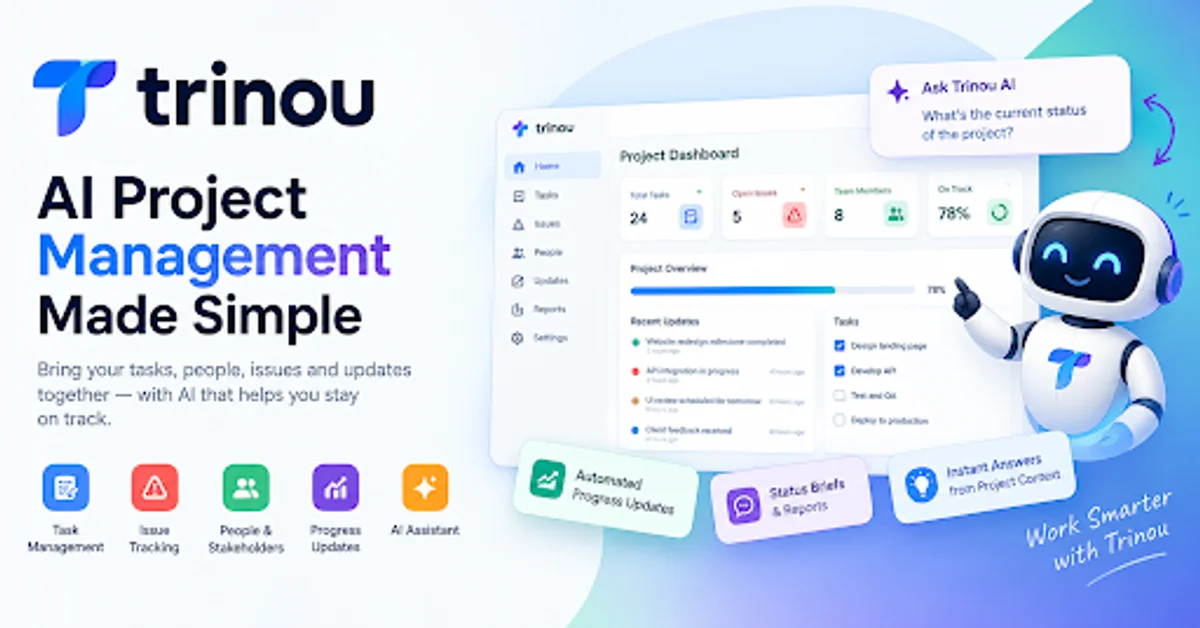
Trinou is an AI-assisted project management platform designed to make everyday project work simpler, clearer, and more organized. Instead of relying only on traditional task lists, Trinou brings tasks, issues, people, project scope, updates, and stakeholder information into one connected environment. Its central idea is to help teams understand what is happening without spending excessive time collecting information manually.
The Trinou platform combines Project Management Software with Artificial Intelligence (AI) to support project tracking and coordination. According to the product information provided, it can gather progress updates, create status briefs, and answer contextual questions about a project. This approach can give project leads and team members a more convenient way to access project information while reducing repetitive administrative work.
Related: Allysplay.com: Gaming News, Reviews and Guides
How Does Trinou Work?
Trinou works by bringing important project data into a shared project environment. Teams can record project scope, assign tasks, manage people, track issues, and monitor progress. Rather than keeping these details scattered across separate documents and conversations, the platform aims to make them easier to access within the same workflow.
The Trinou project management tool then uses this information to support everyday project activities. When a manager needs to understand progress or check an issue, the available project context can help provide a clearer picture. This creates a practical connection between project planning, project tracking, communication, and reporting.
AI-Powered Project Assistance
The Trinou AI assistant is designed to act as a project helper rather than simply another place to store information. By working with project context, the AI Project Assistant can help users find relevant information and understand the current state of their work. This can be particularly useful when projects contain many tasks, stakeholders, dependencies, and updates.
AI project management is becoming more useful when it supports routine work without replacing human decision-making. Trinou follows this general idea by helping with information gathering, progress updates, and contextual answers. People remain responsible for priorities, decisions, planning, and actions, while the software can help make project information easier to use.
Centralized Project Context
One of the useful ideas behind Trinou is centralized project context. A project involves much more than a list of unfinished tasks. It includes goals, responsibilities, issues, updates, decisions, stakeholders, and historical information. Keeping these elements connected can make project visibility easier to maintain.
When project context is organized in one place, team members can spend less time searching through different sources for basic information. Project history can also become more accessible, which may help when someone needs to understand why a task changed or what happened during an earlier stage. Better access to project information can support clearer team communication and project coordination.
Key Features of Trinou
Trinou combines several functions associated with modern project management software. Its features focus on tasks, issues, people, project updates, status reporting, and AI-assisted information retrieval. This makes the Trinou software broader than a basic checklist because it considers the surrounding information that influences project progress.
The platform’s approach can be useful for teams that want project management and AI assistance to work together. Instead of adding automation simply for the sake of technology, the goal is to make recurring activities easier and improve access to useful project insights.
Task and Issue Tracking
Task management is a fundamental part of Project Management, but tasks rarely exist on their own. They may depend on other activities, require approval, or become delayed because of an unresolved issue. Trinou task management aims to keep task information connected with the broader project environment.
Issue tracking adds another important layer. A project can appear active on a dashboard while an important blocker remains unresolved. By combining task and issue management, Trinou can give teams a more complete view of what needs to happen and what might interfere with progress. This supports project transparency and makes it easier to focus attention where it is needed.
People and Stakeholder Management
Projects depend on people, so stakeholder management is an important part of effective project coordination. Team members may have different responsibilities, while stakeholders may need updates, approvals, or visibility into important changes. Keeping these relationships connected to project information can make accountability easier to understand.
Trinou includes people and stakeholder information as part of its project structure. This can help teams identify task ownership and understand who is involved in specific areas of work. Clear ownership can reduce confusion and support smoother collaboration, particularly when multiple departments or cross-functional teams are involved.
Trinou for Automated Progress Updates
Progress updates can become repetitive, especially when project leads need to request information from several people every week. Team members may have to write separate messages, while managers then collect those responses and turn them into a progress report. This creates administrative work that adds little direct value to the project itself.
Trinou automated progress updates are designed to reduce some of this manual effort. By gathering progress information from team members, the platform can help keep project records more current. The purpose is not simply to create more updates, but to make important information easier to collect and use.
Trinou Status Briefs and Project Reporting
A useful status report should quickly explain what has changed, what is progressing, what is blocked, and what requires attention. Long reports can make this information harder to find, particularly when project leads and stakeholders have limited time. Trinou status briefs provide a more structured way to communicate project developments.
Automated reporting can also make recurring project reporting more consistent. Instead of preparing every project brief manually, teams can use information already stored within the platform. This may help project leads prepare for meetings, share updates, and maintain a clearer record of project status.
How Trinou Answers Project Questions
Project questions are often straightforward, but finding the answers can take time. Someone might want to know who owns a task, whether an issue remains open, what changed recently, or what happened during an earlier stage. Without centralized information, answering these questions may require checking several documents or conversations.
Trinou uses project context to provide contextual answers. The AI assistant can work with stored project data to help users locate relevant information more directly. This can be particularly valuable when a team member joins an existing project or when someone needs a quick understanding of project history before making a decision.
Benefits of Using Trinou for Teams
A key potential benefit of Trinou is improved project efficiency. Routine activities such as collecting updates, preparing reports, checking ownership, and searching through project history can consume considerable time across a team. Automating parts of these processes may allow people to dedicate more attention to planning, problem-solving, and execution.
Another potential benefit is stronger project visibility. When tasks, issues, people, updates, and project information are connected, teams can develop a clearer understanding of current work. This can support accountability, communication, and decision-making while reducing unnecessary status-chasing.
Who Can Use Trinou?
Trinou may be suitable for teams that manage projects with multiple moving parts. Small organizations can use project management tools to establish clearer workflows, while larger teams may benefit from having project information organized in a common environment. The platform’s AI capabilities may be particularly relevant to teams that want assistance with recurring project administration.
Its potential audience can include project managers, project leads, agencies, product groups, operations teams, and cross-functional teams. The usefulness of any project management platform depends on the team’s workflow and the quality of information entered into it, so organizations should consider how well its features match their specific needs.
Project Managers and Small Teams
Project managers often spend significant time coordinating tasks, collecting updates, checking blockers, and preparing reports. A project assistant that can organize information and support routine reporting may reduce some of this workload. Trinou is designed around this type of assistance, helping project leads maintain visibility without requiring every update to be manually assembled.
Small teams may also appreciate a simpler approach to project tracking. When the same people are responsible for planning, execution, communication, and reporting, reducing repetitive administrative work can be especially valuable. Trinou’s combination of task management, issue tracking, and AI assistance provides a centralized structure for these activities.
Agencies and Product Teams
Agencies often handle multiple projects, clients, deadlines, and stakeholders at the same time. Keeping project scope, task ownership, issues, and progress information organized can help teams coordinate their work more effectively. Automated project updates and status briefs may also simplify recurring communication with internal teams and stakeholders.
Product teams face similar challenges because development work can involve dependencies, changing priorities, technical issues, and cross-functional collaboration. A centralized project workflow can help connect these moving parts. Trinou may provide useful AI assistance for teams that want faster access to project context while keeping humans responsible for important product decisions.
Things to Consider Before Using Trinou
No project management tool can replace good planning and responsible project practices. Teams still need clear goals, realistic deadlines, defined ownership, accurate documentation, and honest progress information. If project data is incomplete or outdated, AI-generated answers and reports may also provide an incomplete picture.
Organizations should therefore understand what information they plan to store in Trinou and establish clear rules for keeping it current. Teams should also review the platform’s current terms, privacy practices, security information, integrations, and available features before entering sensitive internal project data. These checks help organizations make informed technology decisions.
Trinou and the Future of AI Project Management
AI project management is moving toward tools that can do more than display information. Artificial intelligence can help organize large amounts of project data, summarize updates, identify relevant information, and make routine workflows more efficient. The most useful systems are likely to be those that support people while keeping important decisions under human control.
Trinou reflects this direction by combining project tracking with an AI project assistant. Its focus on project context, automated updates, status briefs, and contextual answers demonstrates how AI can become part of everyday project workflows. As digital project management continues to evolve, this combination may make project information more accessible and actionable.
Related: Syrenis Strategic Initiatives: Growth and Innovation
Frequently Asked Questions
What is Trinou used for?
Trinou is designed for AI-assisted project management. It brings together tasks, issues, people, stakeholders, project updates, and project context while using AI to support reporting and project-related questions.
Does Trinou use artificial intelligence?
Yes. Trinou uses Artificial Intelligence (AI) as part of its project assistant functionality. Its AI capabilities are designed to work with project information and provide contextual assistance.
Can Trinou track tasks and issues?
Yes. Trinou supports task management and issue management, allowing teams to keep track of work that needs to be completed as well as problems that may affect project progress.
Can Trinou create project updates?
Trinou is designed to gather progress information and provide automated progress updates and status briefs. These features can help reduce the manual effort involved in recurring project reporting.
Who may benefit from Trinou?
Project managers, small teams, agencies, product teams, and cross-functional groups may find the platform useful when they need centralized project information and AI-assisted project coordination.
Summary
Trinou brings together Project Tracking, Task Management, Issue Tracking, Stakeholder Management, Team Collaboration, and AI assistance within a single project environment. Its approach focuses on making project information easier to collect, understand, and communicate rather than simply adding another task list.
For teams that spend too much time chasing updates or preparing repetitive reports, this approach offers an interesting way to simplify daily project work. With clear project data, responsible workflows, and human oversight, Trinou can serve as a practical productivity tool for teams looking to make project management more connected, efficient, and accessible.